Menu
Geodesic Dome

How To Relieve Stuffy Nose -

Geodesic Dome Kits that are Easy to Build!

Geodesic Dome Greenhouse Kits for Sale

How To Relieve Stuffy Nose -

Geodesic Chicken Coop
Geodesic Dome Kits that are Easy to Build!

Geodesic Dome Greenhouse Kits for Sale

How To Relieve Stuffy Nose -

Geodesic Dome Greenhouse Kits for Sale

How To Relieve Stuffy Nose -


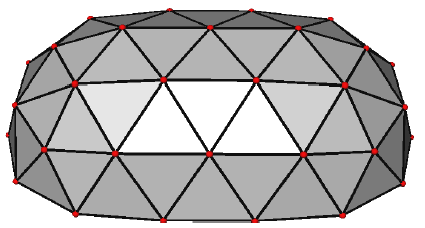
2v Tunnel Domes with 1 Extension Examples

  • 2v Tunnel Dome 1 Ext. Front View
    2v Tunnel Dome 1 Ext. Front View
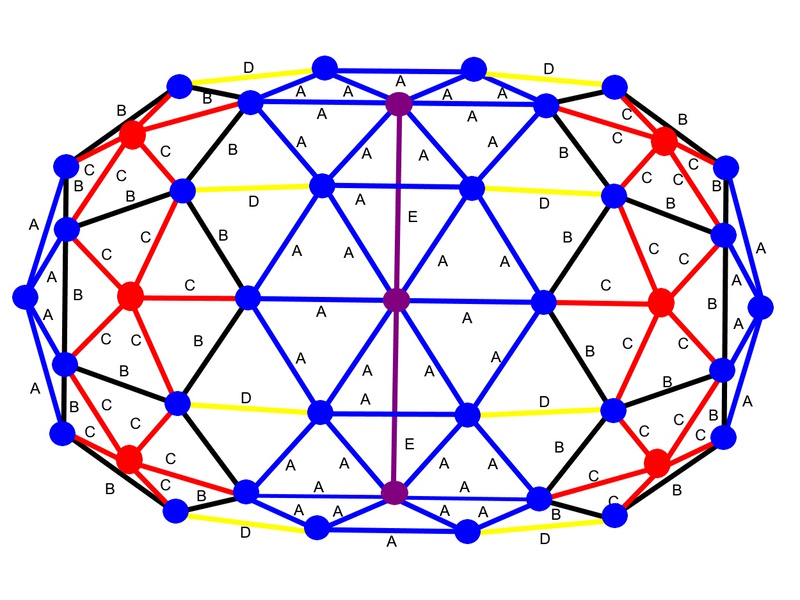
  • 2v Tunnel Dome 1 Ext. Top Down View
    2v Tunnel Dome 1 Ext. Top Down View
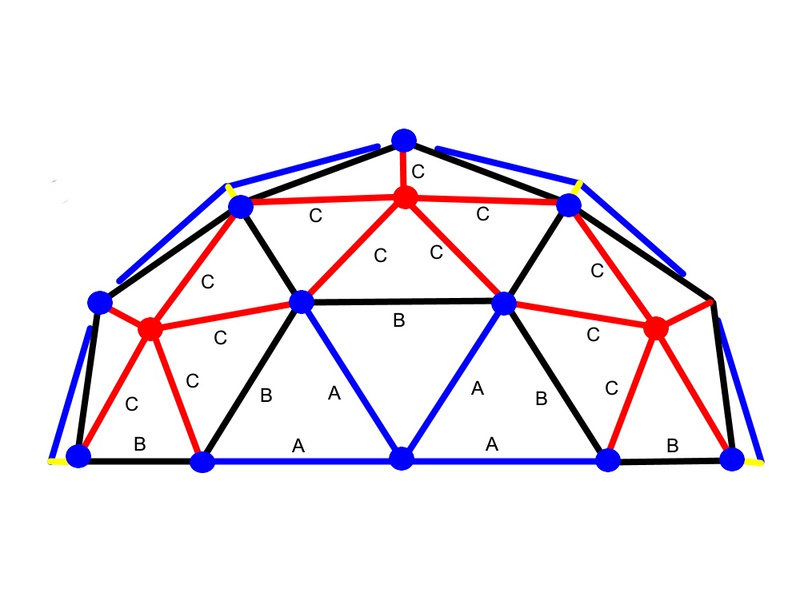
  • 2v Tunnel Dome 1 Ext. Side View
    2v Tunnel Dome 1 Ext. Side View
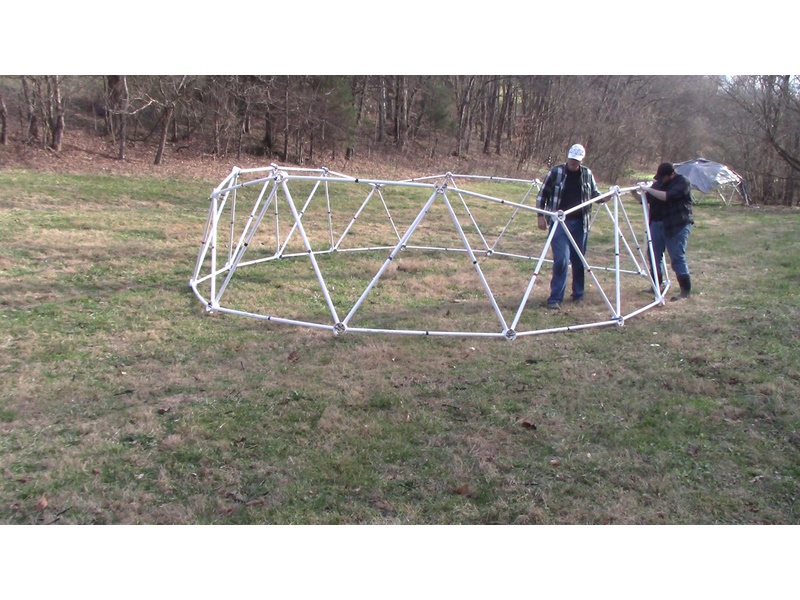
  • Building the 2v Tunnel Dome with 1 Extension
    Building the 2v Tunnel Dome with 1 Extension
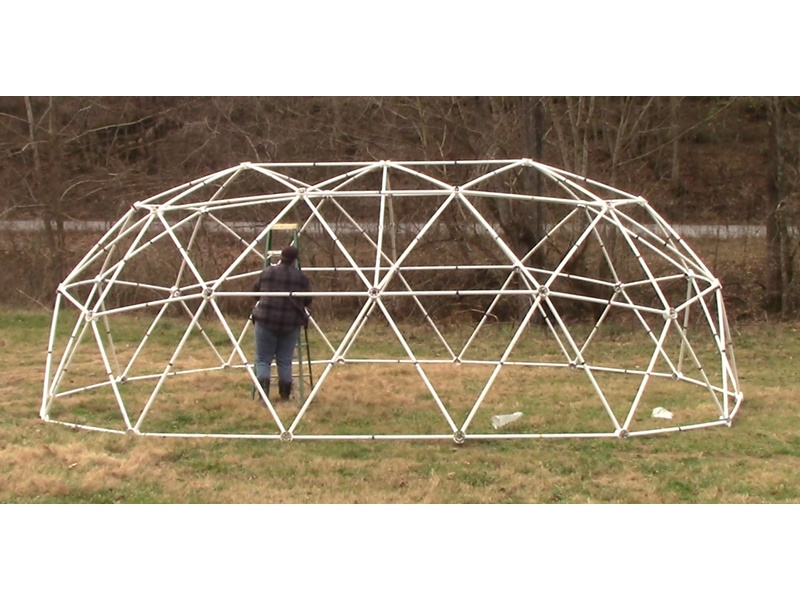
  • Completed 2v Tunnel Dome with 1 Extension
    Completed 2v Tunnel Dome with 1 Extension

41 hubs, 106 struts.
The 2v Tunnel Dome with 1 Extension produces a larger space for a greenhouse or shed.
Listed 2v Tunnel Dome 1 Extension Sizes: 11' wide, 17' long to 20' wide, 30' long.
You can build larger or smaller 2v Tunnel Domes by adjusting the strut lengths, contact us for details.

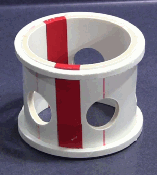
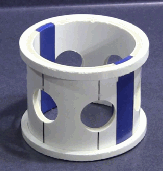
2v Tunnel Dome Dual Covering Hubs

Requires a Chop Saw to Manufacture.

how to relieve stuffy nose
5-way Red Hubs
how to relieve stuffy nose
6-way Blue Hubs

The Dual Covering Hubs are used for building geodesic greenhouses in cold weather environments.

  The Dual Covering Hubs allows a Greenhouse to be covered with 2 layers of plastic, one on the inside and one on the outside of the dome. This creates a "dead air space" between the two layers for plastic for better insulation.

 The Dual Covering Hubs require a chop saw to manufacture. how to relieve stuffy nose

Tools Needed to Manufacture the Dual Covering Hubs: A Power Hand Drill or Drill Press, and a Chop Saw for cutting the hubs and rings.


Each 2v Tunnel Dome with 1 Extension Download Contains:

Beyond medications, environmental and positional adjustments provide powerful, side-effect-free relief. Humidity is a crucial ally: dry air, especially from winter heating, crusts mucus and worsens swelling. Running a cool-mist humidifier or sitting in a steamy bathroom for ten minutes can soften secretions and soothe inflamed vessels. Gravity also plays a role. Lying flat allows blood to pool in the head, increasing pressure and stuffiness. Elevating the head with two or three pillows, or even sleeping in a recliner, uses gravity to drain sinus fluids and reduce venous pressure. Interestingly, gentle exercise—such as a brisk walk—triggers the body’s adrenaline response, temporarily constricting nasal blood vessels and opening airways for up to an hour. While not a cure, this natural decongestion can provide a welcome window of relief.

Finally, addressing the root cause prevents recurrence. Allergic congestion requires antihistamines, not decongestants alone, because histamine is the primary driver of swelling. Viral congestion, conversely, does not respond to antibiotics, but does respond to anti-inflammatory foods like ginger and peppermint tea, as well as adequate hydration. One overlooked factor is air quality: dust, pet dander, and smoke keep nasal tissues chronically irritated. A high-efficiency particulate air (HEPA) filter in the bedroom can dramatically reduce nighttime stuffiness. Furthermore, spicy foods containing capsaicin (chili peppers) trigger a temporary, reflex increase in nasal secretions, which paradoxically helps clear passages, though the effect lasts only minutes.

The stuffy nose is a universal annoyance, yet its underlying mechanics are often misunderstood. Most people assume a stuffy nose results from an excess of solid mucus blocking the nasal passages like a cork in a bottle. In reality, the primary culprit is inflammation. The nasal tissues become swollen with blood, narrowing the airway and creating the sensation of being “clogged.” Consequently, effective relief does not come from a single magic bullet but from a strategic combination of reducing inflammation, thinning secretions, and leveraging the body’s natural anatomy. By understanding the “why” behind each remedy, anyone can navigate the discomfort of nasal congestion with precision and speed.

For those seeking faster, drug-based relief, the pharmacy aisle offers two distinct paths: decongestants and saline sprays, but they must be used wisely. Oral decongestants like pseudoephedrine work systemically, constricting blood vessels throughout the body to shrink nasal tissues. They are excellent for short-term relief but can raise blood pressure and cause jitteriness. Topical sprays (oxymetazoline) act within minutes, yet they carry a notorious trap: after three days of use, the nose becomes dependent on the spray, leading to “rhinitis medicamentosa,” or rebound congestion, which is worse than the original condition. In contrast, simple saline sprays have no rebound risk and can be used hourly. The prudent strategy is to reserve topical decongestant sprays for only the worst nights of a cold, using them strictly for two days before switching to saline or oral options. Gravity also plays a role

In conclusion, relieving a stuffy nose is less about brute force and more about strategic thinking. The most effective approach layers multiple methods: saline irrigation to cleanse, steam and humidity to soothe, head elevation to drain, and judicious use of medications to break the cycle of inflammation. Avoiding common pitfalls—overusing sprays, lying flat, or neglecting hydration—is just as important as applying remedies. While a stuffy nose rarely signals a serious illness, its impact on sleep, focus, and quality of life is undeniable. By respecting the physiology of the nasal passage and using these evidence-based tools wisely, anyone can turn the frustrating experience of being “stuffed up” into a manageable, temporary inconvenience.

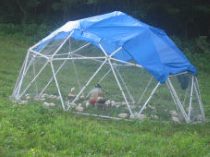


Download a Complete Set of Instructions and Manufacturing License for Building a 2v Tunnel Dome with 1 Extension Using our Patented Hub Design


how to relieve stuffy nose
Geodesic Tunnel Dome with 1 Extension Plans
(with Dual Covering Hubs) Price: $41.00

41 hubs, 106 struts.
Download Geodesic Tunnel Dome Plans with 1 Extension (with Dual Covering Hubs)
Price: $41.00
how to relieve stuffy nose

Secure Credit Card Processing by how to relieve stuffy nose how to relieve stuffy nose

We cannot accept returns on digital downloads.

All digital download sales are final.

If you have any questions, you can call us at 1 (931) 858-6892. Avoiding common pitfalls—overusing sprays


How To Relieve Stuffy Nose -

Beyond medications, environmental and positional adjustments provide powerful, side-effect-free relief. Humidity is a crucial ally: dry air, especially from winter heating, crusts mucus and worsens swelling. Running a cool-mist humidifier or sitting in a steamy bathroom for ten minutes can soften secretions and soothe inflamed vessels. Gravity also plays a role. Lying flat allows blood to pool in the head, increasing pressure and stuffiness. Elevating the head with two or three pillows, or even sleeping in a recliner, uses gravity to drain sinus fluids and reduce venous pressure. Interestingly, gentle exercise—such as a brisk walk—triggers the body’s adrenaline response, temporarily constricting nasal blood vessels and opening airways for up to an hour. While not a cure, this natural decongestion can provide a welcome window of relief.

Finally, addressing the root cause prevents recurrence. Allergic congestion requires antihistamines, not decongestants alone, because histamine is the primary driver of swelling. Viral congestion, conversely, does not respond to antibiotics, but does respond to anti-inflammatory foods like ginger and peppermint tea, as well as adequate hydration. One overlooked factor is air quality: dust, pet dander, and smoke keep nasal tissues chronically irritated. A high-efficiency particulate air (HEPA) filter in the bedroom can dramatically reduce nighttime stuffiness. Furthermore, spicy foods containing capsaicin (chili peppers) trigger a temporary, reflex increase in nasal secretions, which paradoxically helps clear passages, though the effect lasts only minutes.

The stuffy nose is a universal annoyance, yet its underlying mechanics are often misunderstood. Most people assume a stuffy nose results from an excess of solid mucus blocking the nasal passages like a cork in a bottle. In reality, the primary culprit is inflammation. The nasal tissues become swollen with blood, narrowing the airway and creating the sensation of being “clogged.” Consequently, effective relief does not come from a single magic bullet but from a strategic combination of reducing inflammation, thinning secretions, and leveraging the body’s natural anatomy. By understanding the “why” behind each remedy, anyone can navigate the discomfort of nasal congestion with precision and speed.

For those seeking faster, drug-based relief, the pharmacy aisle offers two distinct paths: decongestants and saline sprays, but they must be used wisely. Oral decongestants like pseudoephedrine work systemically, constricting blood vessels throughout the body to shrink nasal tissues. They are excellent for short-term relief but can raise blood pressure and cause jitteriness. Topical sprays (oxymetazoline) act within minutes, yet they carry a notorious trap: after three days of use, the nose becomes dependent on the spray, leading to “rhinitis medicamentosa,” or rebound congestion, which is worse than the original condition. In contrast, simple saline sprays have no rebound risk and can be used hourly. The prudent strategy is to reserve topical decongestant sprays for only the worst nights of a cold, using them strictly for two days before switching to saline or oral options.

In conclusion, relieving a stuffy nose is less about brute force and more about strategic thinking. The most effective approach layers multiple methods: saline irrigation to cleanse, steam and humidity to soothe, head elevation to drain, and judicious use of medications to break the cycle of inflammation. Avoiding common pitfalls—overusing sprays, lying flat, or neglecting hydration—is just as important as applying remedies. While a stuffy nose rarely signals a serious illness, its impact on sleep, focus, and quality of life is undeniable. By respecting the physiology of the nasal passage and using these evidence-based tools wisely, anyone can turn the frustrating experience of being “stuffed up” into a manageable, temporary inconvenience.

For telephone orders or questions, call us at .

Or, go to our Contact Us page to send us an email.