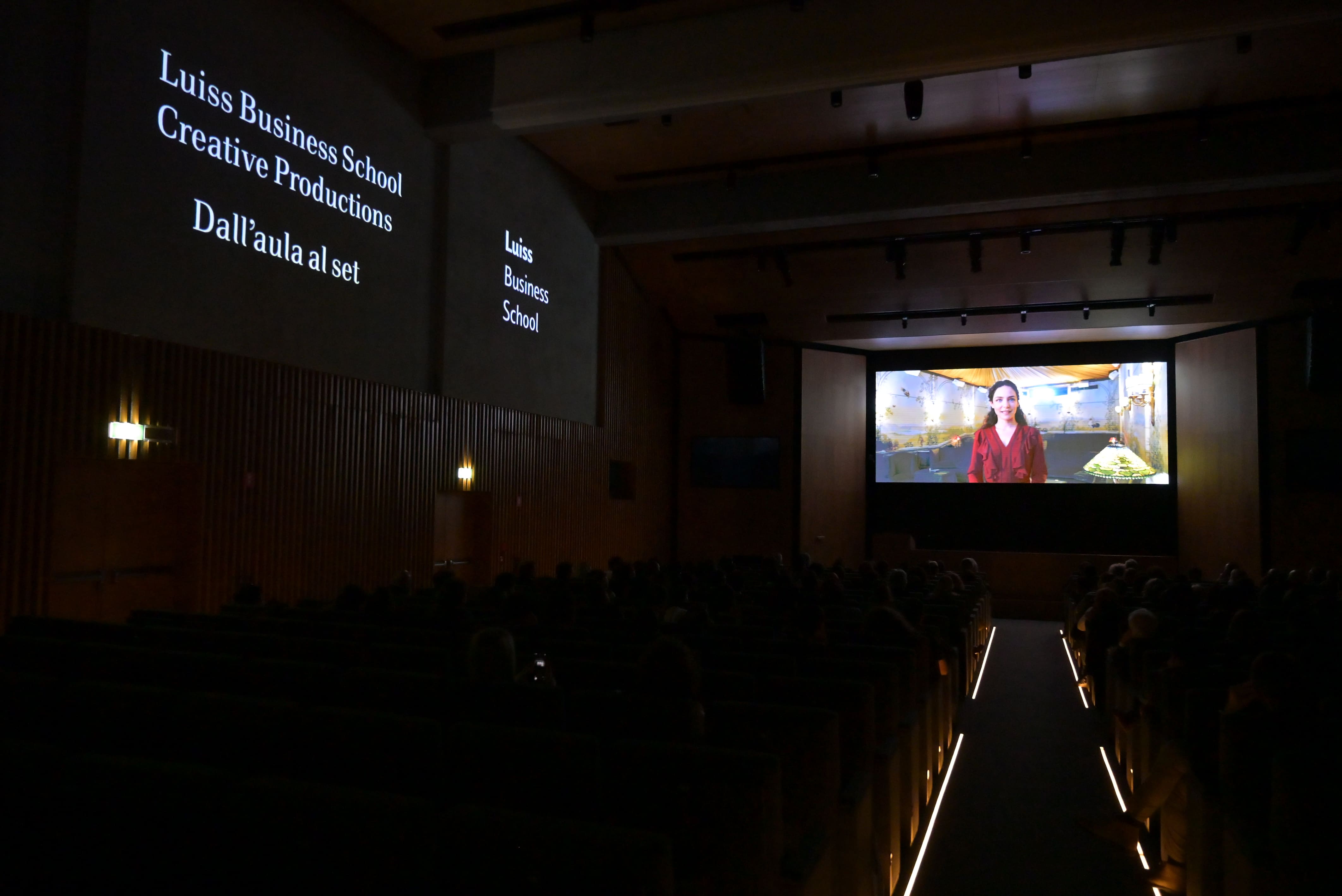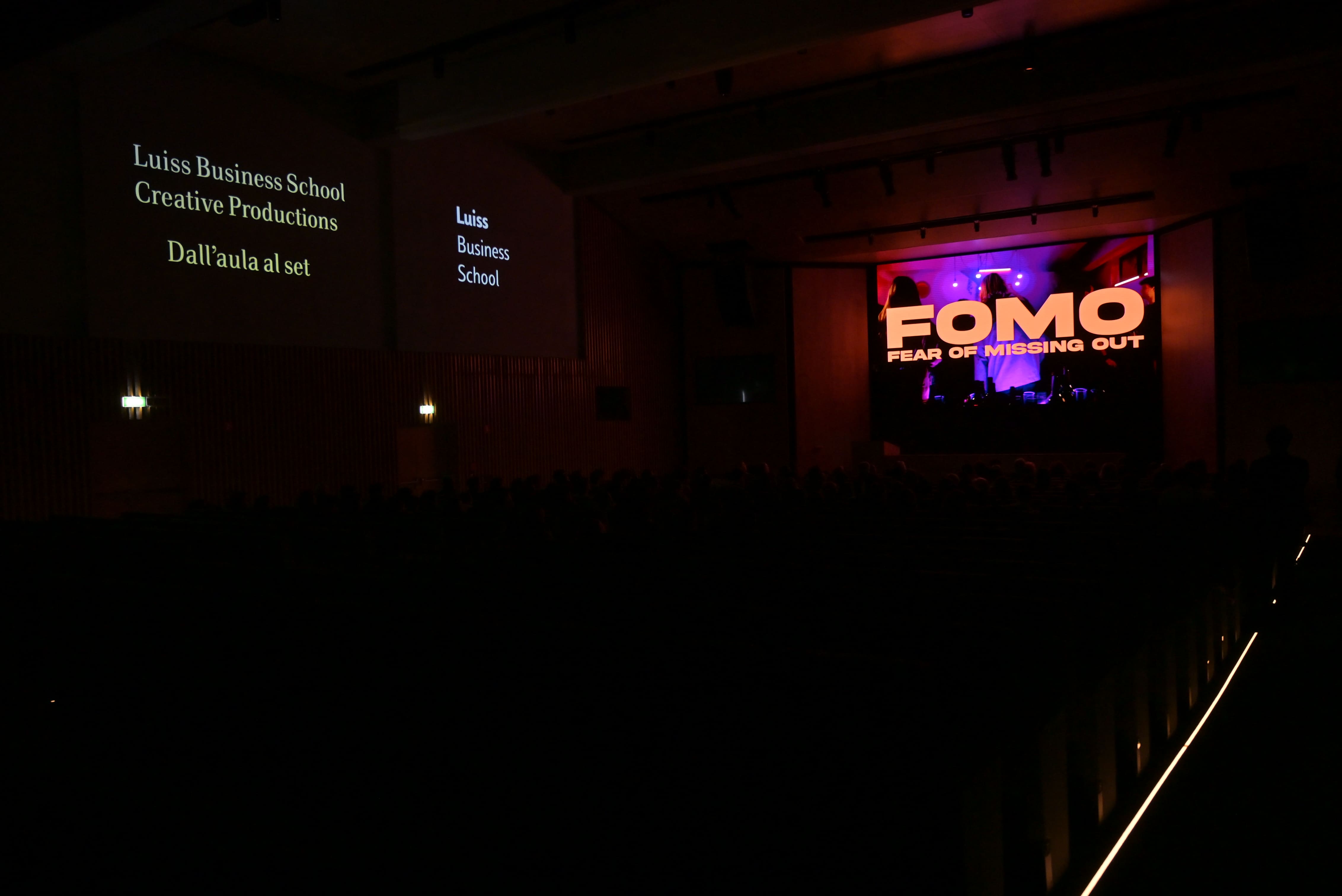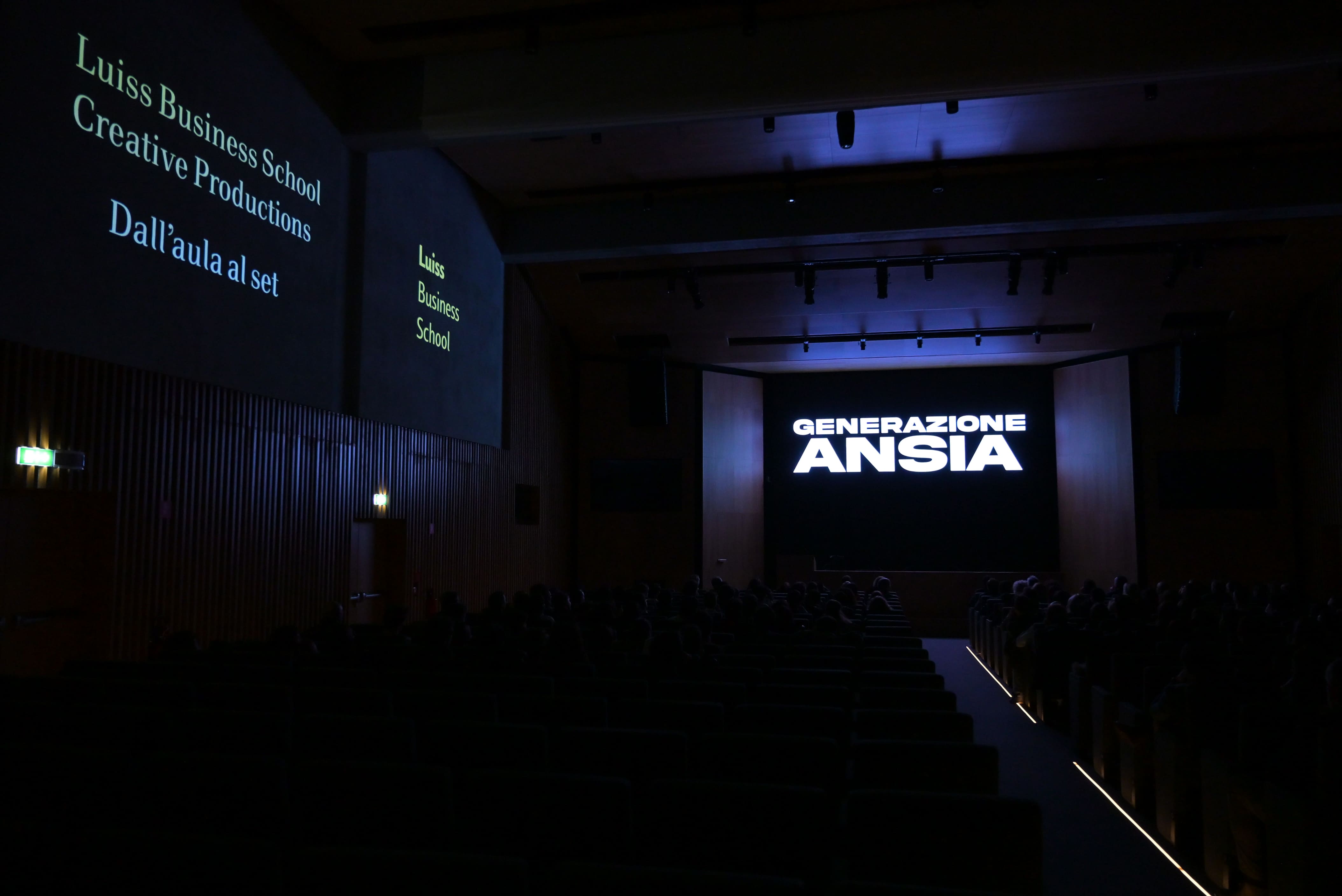
Formazione avanzata per gestire e valorizzare produzioni cinematografiche,
televisive e audiovisive, coniugando creatività e competenze manageriali
Al termine del Master, gli studenti presentano i propri concept per il pilot di una serie TV. Il progetto selezionato viene poi realizzato dagli allievi, in tutte le fasi editoriali, produttive e di post-produzione, con la supervisione di professionisti del settore e con il supporto
di una giuria di esperti che guida e valorizza lo sviluppo creativo.
Con un placement rate del 100%, una faculty di caratura internazionale e la solidità di un network di partnership aziendali, la formazione full-time Luiss Business School ha l’obiettivo di trasmettere competenze avanzate e immediatamente applicabili, agevolando l’upskilling e accelerando la crescita professionale e personale di giovani professionisti e neolaureati.
Scrivici per prenotare una sessione di orientamento
e scopri il percorso più adatto alle tue ambizioni!
© Luiss Business School Spa “a socio unico” n. iscr. Registro Imprese Roma / p.iva /c.f. 16656061005, capitale sociale i.v. 30.000.000,00 euro.
Villa Blanc, Via Nomentana, 216 - 00162 Roma | Tel. +39 06 85 22 51 | Email: luissbs@luissbusinessschool.it | Informativa sul trattamento dei dati di navigazione | Cookie policy
Another critical area where ICSE Class 8 students need help is . The ICSE paper is lengthy. A practical strategy is to divide the 2.5-hour exam into segments: 30 minutes for Section A (short answer questions) and 2 hours for Section B (long answer problems). Regular practice of sample papers under timed conditions helps build this rhythm. Moreover, creating a formula sheet for chapters like Understanding Shapes (properties of quadrilaterals) and Data Handling can serve as a quick revision tool the night before the exam.
The first step to mastering ICSE Maths is understanding the unique structure of the syllabus. Unlike some other boards, ICSE places a heavy emphasis on the application of concepts. Chapters like Sets , Profit, Loss and Discount , and Simple and Compound Interest are not just theoretical; they appear directly in our daily lives. To tackle these, a student must move beyond rote memorization. For example, when studying Mensuration , instead of just memorizing the formula for the volume of a cylinder (( \pi r^2 h )), one should visualize a water tank or a can of cold drink. This contextual learning transforms abstract numbers into tangible realities, making retention effortless. icse help class 8 maths
Furthermore, Class 8 is the foundation for high school. Concepts like Exponents and Linear Equations in Class 8 are directly carried forward to Class 9 and 10. Therefore, the "ICSE help" one seeks should focus on conceptual clarity rather than shortcuts. For instance, in Factorisation , a student must understand the distributive law ((a(b+c) = ab + ac)) thoroughly. Relying on guesswork or mugging up patterns will lead to failure in higher grades. Smart students use reference books and online video tutorials to see multiple methods of solving the same problem, ensuring they understand the 'why' behind the 'how'. Another critical area where ICSE Class 8 students
Mathematics is often described as the language of the universe. For a Class 8 student following the Indian Certificate of Secondary Education (ICSE) curriculum, this subject is much more than a mere academic requirement; it is a critical tool that sharpens logical reasoning and problem-solving skills. However, many students find themselves intimidated by concepts like rational numbers, algebraic expressions, or commercial mathematics. The truth is, excelling in ICSE Class 8 Maths is not about being a genius—it is about strategy, consistent practice, and the intelligent use of resources. Regular practice of sample papers under timed conditions
However, understanding alone is insufficient. The bridge between knowing a formula and applying it under exam pressure is . The ICSE question papers are known for their tricky, multi-step problems. A student must dedicate at least an hour daily to solving problems from standard textbooks like Selina Concise Mathematics or M.L. Aggarwal . Here is where specific help becomes vital. When stuck on a problem, a student should follow a three-step rule: First, revisit the solved examples in the textbook. Second, ask a peer or a tutor. Third, and most importantly for self-study, consult ICSE help guides that provide step-by-step solutions. These guides are invaluable because they show the logic behind rearranging an equation or drawing a geometrical construction correctly.