We are immensely proud of commissioning and working alongside Assouline on this snapshot of Jamaica; the people, the places and the personality that makes us unique.
Find out more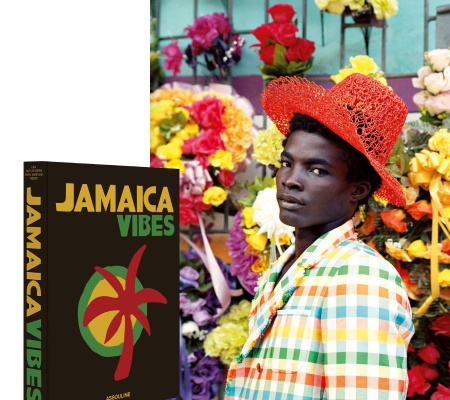
Lyrically, the song functions as a masterclass in Nicki Minaj’s signature stylistic device: the seamless collision of the cartoonish and the carnal. The verses are a whirlwind of pop-culture references, puns, and braggadocio that destabilize any attempt at straightforward interpretation. Consider the opening: "I see you eyein' me, I'm a mystery / You're like, 'Who is she? She gets what she wants.'" Within two lines, Minaj establishes a dialectic between the unknowable (mystery) and the transactional (getting what she wants). This tension is never resolved, nor should it be. She further layers the text with absurdist imagery: "Got the bass in the trunk, got the '64 bumpin' / With the ragtop down, my hair's a mess, I'm lookin' like a hot mess." Here, the glamorous ideal of the pop star is intentionally sabotaged. The "hot mess" is not an accident; it is a curated aesthetic of controlled chaos. The va va voom is not fragile perfection; it is the confidence to be disheveled and dominant simultaneously.
Critically, the song also engages with the economics of desire. The music video, a candy-colored, Alice in Wonderland -themed fantasy, literalizes the idea of the female artist as a queen in a constructed wonderland. She drives the narrative; she drives the car; she drives the male lead to distraction. In the lyrics, she explicitly links her power to material success: "Tell me I'm the one, I'm the only one / Make me feel like I'm your number one." This is not a plea for validation; it is a negotiation. She offers the va va voom, but the price is total devotion. This transactional clarity is often misread as anti-feminist, but Minaj subverts that reading by ensuring she holds the product—the sexual-energy—and the means of its distribution. She is not the object being bought; she is the vendor. nicki va va voom
In the sprawling, kaleidoscopic discography of Onika Tanya Maraj—known to the world as Nicki Minaj—certain tracks serve as more than mere pop singles. They function as sonic manifestos, condensing her artistic philosophy into three minutes of hyper-colored chaos. Originally recorded for her scrapped Pink Friday follow-up and later appearing on the 2012 re-release Pink Friday: Roman Reloaded – The Re-Up , "Va Va Voom" is often dismissed by casual listeners as a frothy, commercial bid for radio dominance. However, to engage in such a dismissal is to miss the point entirely. "Va Va Voom" is not just a song about attraction; it is a meticulously constructed thesis on the nature of female power, linguistic flexibility, and the alchemy of turning pop artifice into authentic agency. Lyrically, the song functions as a masterclass in
At its core, "Va Va Voom" operates on a deceptively simple lyrical premise: the speaker possesses an indefinable, explosive quality (the titular "va va voom") that renders a male love interest utterly powerless. The phrase itself, borrowed from the French vavoom popularized in mid-20th-century American culture to describe curvaceous, glamorous women, is instantly weaponized. Minaj reclaims a vintage objectifying term and transforms it into a battering ram. The song’s hook—"I just wanna hear you say my name / When I give you that va va voom"—is a command, not a request. The male figure is relegated to the role of a spectator or a worshipper, stripped of traditional masculine initiative. He does not act; he reacts. This reversal of the male gaze is the song’s foundational political act. In the universe of "Va Va Voom," female sexuality is not a passive commodity to be consumed but an active energy that reorders reality. She gets what she wants
One cannot analyze "Va Va Voom" without situating it within the context of Nicki Minaj’s larger alter-ego mythology. Though Roman Zolanski—her manic, gay-boy persona—does not explicitly appear, the song is haunted by his ethos. The sheer theatricality of the performance, the willingness to be loud, absurd, and excessive, is Roman’s inheritance. The bridge, where Minaj delivers a rapid-fire list of similes ("Shinin' like a chandelier / Got a ass that'll bring you to tears"), is pure Roman-esque hyperbole. It refuses the subtlety that female pop stars are often expected to perform. There is no demure invitation here; there is only declaration. This is the power of the "va va voom" as a linguistic concept: it is a sound effect, a comic book onomatopoeia that reduces the complexities of desire to a single, irrefutable impact. Pow. Bam. Va va voom.
We are immensely proud of commissioning and working alongside Assouline on this snapshot of Jamaica; the people, the places and the personality that makes us unique.
Find out more