SAP S/4HANA Transition Framework: A Roadmap Guide
Discover seamless SAP S/4HANA transition in this guide. Explore pathways from greenfield to conversion, boosting agility and innovation.

from yellowbrick.model_selection import LearningCurve, ValidationCurve from yellowbrick.classifier import ROCAUC, ClassificationReport lc = LearningCurve(LogisticRegression()) lc.fit(X, y) lc.show() # If curves converge early → more data won't help 2. Tune regularization (C parameter) vc = ValidationCurve(LogisticRegression(), param_name="C", param_range=np.logspace(-4, 1, 6)) vc.fit(X, y) vc.show() # Find C where validation score peaks 3. Final model with class imbalance check rocauc = ROCAUC(LogisticRegression(C=0.1)) rocauc.fit(X_train, y_train) rocauc.score(X_test, y_test) rocauc.show() # AUC + each-class ROC curve
Yet, many data scientists stop at a single number—accuracy, F1 score, or RMSE. But models fail in complex ways. Residuals have patterns. Classes get imbalanced. Clusters overlap. Hyperparameters drift. yellowbrick analyst tool
Yellowbrick fixes this by introducing Visualizers —objects that learn from data (fitting) and then generate plots automatically. 1. The Visualizer API (Familiar to Scikit-learn users) If you know fit() , predict() , and score() , you already know Yellowbrick. from yellowbrick
Every time you train a model, ask yourself: Did I check the residual distribution? The learning curve? The feature correlation? But models fail in complex ways
This is where changes the game.

Discover seamless SAP S/4HANA transition in this guide. Explore pathways from greenfield to conversion, boosting agility and innovation.

Learn how to simplify your database migration process with SAP DMO (Database Migration Option) of SUM, and ensure a seamless transition to your new system.
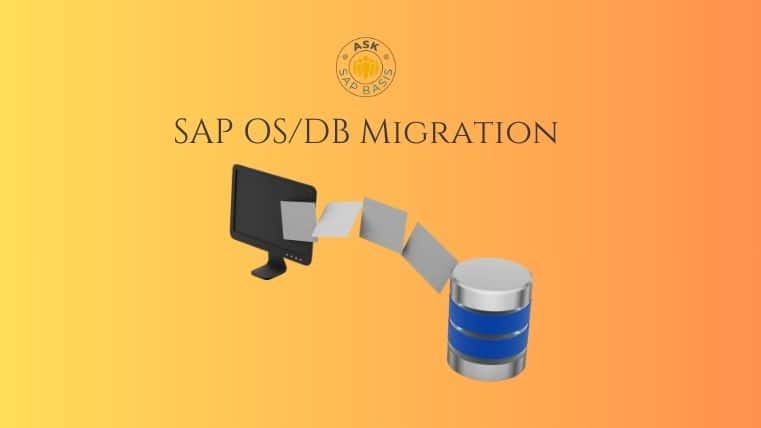
Migrating your SAP system? Whether you’re a beginner or experienced, learn the basics of SAP OS DB migration with ease through our step-by-step guide.

Introduction In the world of enterprise IT, SAP OS/DB migration isn’t just a routine technical upgrade — it’s a career-defining milestone. Whether you’re dealing with a homogeneous migration (same OS and DB) or a heterogeneous migration (different OS or DB), these projects are high-stakes, business-critical,…
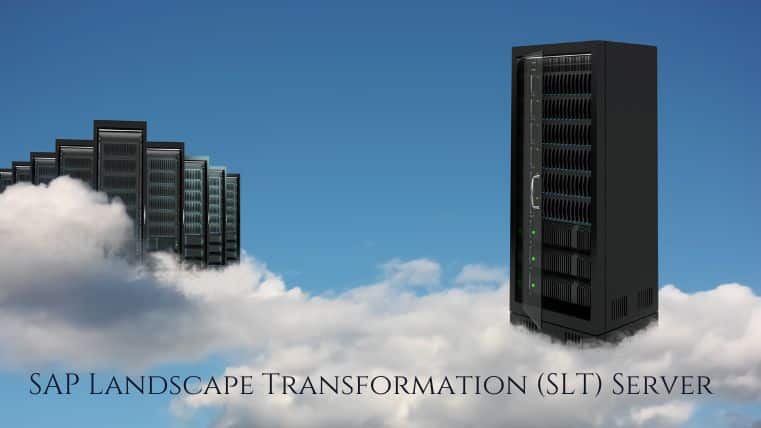
Explore the power of SAP Landscape Transformation (SLT) Replication Server and its role in seamless data replication and transformation within your SAP ecosystem. Learn how SLT enhances data integration and supports efficient business processes.

Discover SAP HANA replication strategies in simple terms. Get practical insights for high availability and data reliability in your digital journey.