Dhaka-Facts
    - Good to know
    zktime net 3.0 crack download free

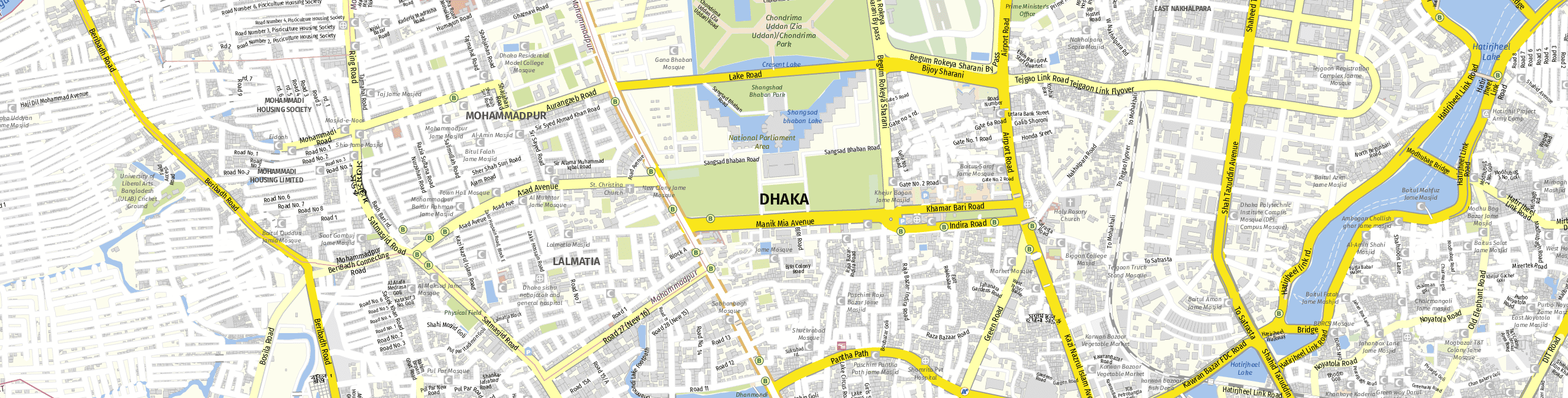
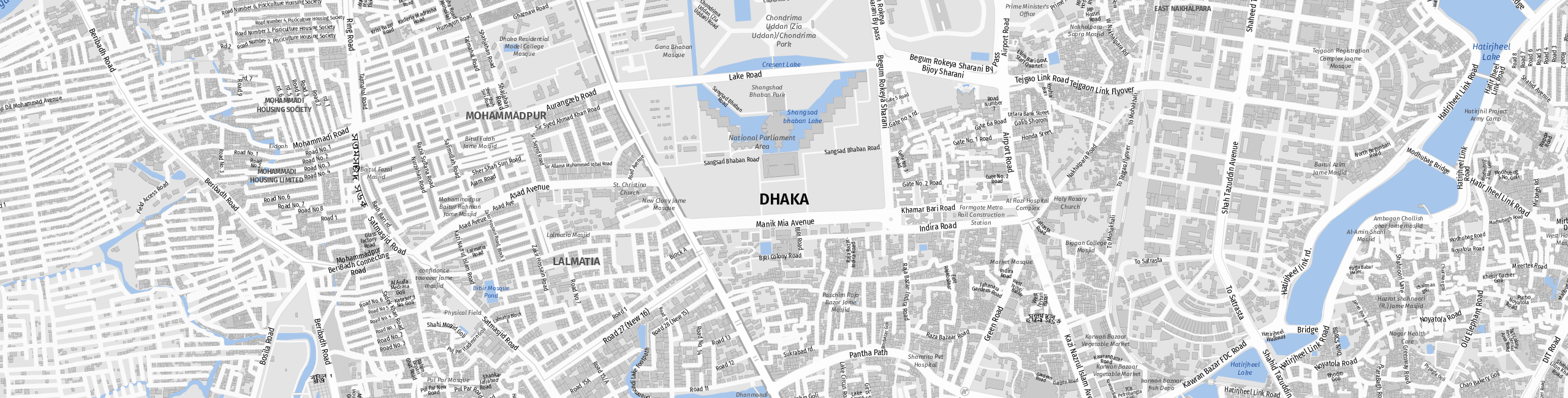
    Our city map of Dhaka (Bangladesh) shows 29,650 km of streets and paths. If you wanted to walk them all, assuming you walked four kilometers an hour, eight hours a day, it would take you 927 days. And, when you need to get home there are 801 bus and tram stops, and subway and railway stations in Dhaka.

    With a total area of 6 square kilometers, public green spaces and parks make up 0.029% of Dhaka’s total area, 20,413 square kilometers. That means each of Dhaka’s 21,741,000 residents has an average of 0.3 square meters.

    When people in Dhaka want to go out, they are spoilt for choice; our map shows more than 115 cafés, restaurants, bars, ice-cream parlors, beer gardens, cinemas, nightclubs and theatres. The city also boasts more than 252 sights and monuments, and far more than 9,979 retailers. Feeling tired? Our map shows more than 395 hotels and guest houses, where you can rest.


    • Map download service

      City, regional and country maps from Kober-Kuemmerly+Frey can be generated with the optimum print or screen resolution for every application. Use our maps in your image brochures and travel catalogues, or on your website. Or add an attractive location map to your real estate flyer. zktime net 3.0 crack download free

    The following companies use maps from mapz.com

    • Marlit-Christine Heinersdorff
      LOOXX* magazine
      Thanks to mapz.com, the service city map in our LOOXX* magazine uses our corporate colors. Brilliant!
    • Dieter C. Rangol
      German Swimming Pool Federation
      mapz.com gives our member companies rapid, easy access to professionally designed location maps for their websites, brochures and catalogues.
    • Daniel Tolksdorf
      Aengevelt Real Estate
      mapz.com offers the best looking maps for our high-quality real estate flyers.
    • Silja Schelp
      Humboldt Travel
      mapz.com helps us create attractive maps showing the special features of our tours, anywhere in the world.

    Zktime Net 3.0 Crack Download Free ~upd~ -

    He clicked on a thread titled “ZKTime Net 3.0 cracked – free download”. The post was terse: “Here’s the .exe. No virus. MD5: abcdef1234567890. Use at your own risk.” A link led to a file‑hosting site with a download button that said “Free”. The page was riddled with ads and a warning that it might contain malware.

    He opened a new tab and typed “zktime net 3.0 crack download free” into the search bar. The results were a mixture of shady forums, a few “torrent” sites, and a couple of blogs that promised “the ultimate fix for ZKTime Net”. He felt a twinge of guilt—he’d read the terms of service before, the line about “no unauthorized distribution”. Yet the pressure of the looming demo, the sleepless nights, and the weight of his investors’ expectations pressed down on him like a physical force.

    He’d already spent his small seed‑fund budget on cloud credits, a decent laptop, and a handful of open‑source tools. The license for ZKTime Net was priced for enterprises, far beyond what his modest account could afford. The official website listed a 30‑day trial, but the trial version disabled the very feature he needed: the high‑precision clock drift correction. Ethan knew that without it, the demo would be jittery, the graphs would jitter, and investors would see a half‑baked product.

    After the meeting, Ethan reflected on the night’s temptation. The “crack” might have seemed like a quick shortcut, but it would have cost him more than a license fee—potential legal trouble, malware, and a breach of the trust he’d built with his team and investors. Instead, the extra effort of seeking a legitimate, open‑source solution not only saved him from those risks but also contributed back to the community that had helped him.

    The next morning, with a fresh cup of coffee, Ethan integrated ChronoSync into his dashboard. The graphs now ran smoothly, the timestamps aligned perfectly across his microservices, and the demo was ready. When he presented to the investors, they were impressed—not just by the polished UI, but by the fact that the underlying system was built on openly shared, community‑maintained code.

    Ethan hesitated. He thought of the stories he’d heard about developers whose laptops were turned into bots, about the countless hours spent cleaning up after a malicious payload. He also thought of the excitement he’d felt the first time he’d built a simple web scraper at age sixteen—how the thrill of making something work against the odds was part of why he’d chosen this path.

    Ethan stared at his blinking cursor, the glow of his laptop screen casting a pale halo across the dim apartment. It was 2 a.m., the city outside a hushed lull of distant traffic and the occasional siren. He’d been working on a prototype for his startup for weeks now—a sleek, real‑time analytics dashboard that could turn raw data into actionable insights with a few clicks. The only thing standing between his vision and a working demo was a piece of middleware called , a commercial library that promised nanosecond‑level time synchronization across distributed services.