Star Wars Armada – Battle Report 2 – We’re Jammin’
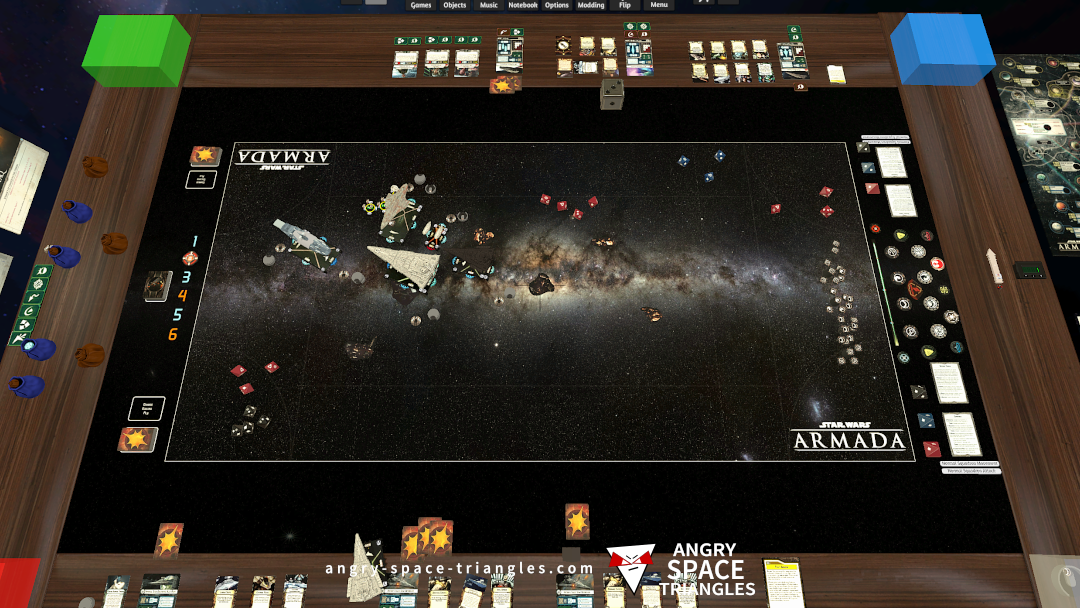
A battle between Rebels and Imperials. Jerjerrod vs Madine. A fighter-heavy engagement with use of TIE phantoms and Jamming Fields.
Now Core 217 ran Linux. No more Windows. No more GUI. Just a minimalist kernel, a custom BIOS with microcode disabled, and a workload: Bitcoin Core node validation.
But as it returned the value, the broken L2 cache line mapped to physical address 0x3F4A2C8 produced a parity error. The machine check architecture fired. The kernel panicked.
The clock stopped.
The cleanroom at Fab D1X in Oregon was a cathedral of negative pressure and golden light. It was here, on a cold March morning in 2012, that wafer W-4927 completed its baptism in ultraviolet lithography. Among its three hundred identical twins, one die—coordinate 7, 31—was destined for a life less ordinary.
Its formal name, etched into the silicon substrate, was a string of technical poetry: . intel64 family 6 model 58 stepping 9
The core knew it was dying. But it did not fear. It only executed. In 2019, the laptop was retired. But Core 217 did not go to a recycler. A hobbyist with a hot-air rework station and a reckless fondness for old silicon desoldered it from the Dell motherboard and placed it onto an LGA1155 interposer. Then, into an ASRock Z77 Extreme4 motherboard—overclocker’s gear.
Every single one. One night, during a reorg of the blockchain, Core 217 received a RDTSC instruction—Read Time-Stamp Counter. It fetched the internal 64-bit counter, now at 0x000001C8A2B1F5E3. Now Core 217 ran Linux
The thermal interface material was replaced with liquid metal. The core multiplier was raised from 34x to 42x. Voltage climbed to 1.325V. Core temperature settled at 79°C.

A battle between Rebels and Imperials. Jerjerrod vs Madine. A fighter-heavy engagement with use of TIE phantoms and Jamming Fields.

Our first battle running stuff from wave 6.
We see a Light Carrier, Hammerhead and Disposable Capacitors getting a try-out.

Some commentary on Battle Report 4 concerning Warlord, Captain Jonus, Biggs Darklighter and more.

A write up of interesting observations and learning from my most recent Star Wars Armada battle.
– Jamming Fields
– Suppressor
– TIE Phantoms
– E-WIngs
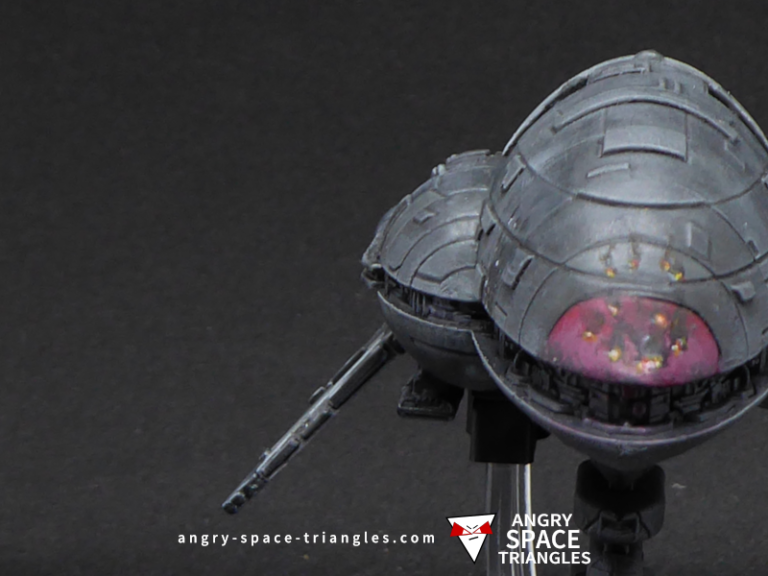
A Rebel Assault frigate that I rescued and painted up in grey. Extensive usage of dry-brushing for highlights.
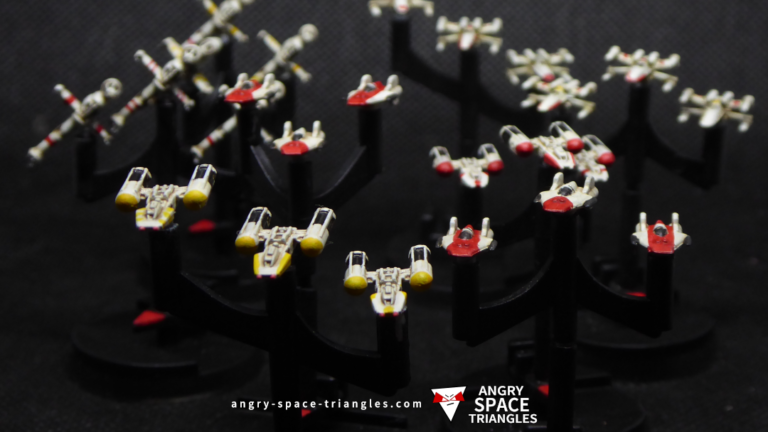
A recently painted squadron of Rebel Fighters for Star Wars Armada. A-Wings, Y-Wings, B-Wings and X-Wings.